
























You probably have many contacts in your phone right now. However, in a crisis, which friend would you reach out to? Many people can name hundreds of contacts on their phones, yet only a few they would call in a desperate moment. This contrast reflects the argument about modern friendships. For example, have you ever noticed or wondered why some people have larger social circles than others? Is it something you should strive for, or does it depend on the type of person you are? On the other hand, maybe the quality of your friendships is more beneficial than the quantity. After all, there is a common saying that emphasizes quality over quantity when it comes to social groups. So what is the difference and is one option truly better than the other?
According to friendship coach Bayard Jackson, it takes approximately 34 hours to turn an acquaintance into a friend. With this in mind, wouldn’t most people prefer to invest that time in someone who will be there for them in the long run?
What Is Considered a Large Friendship Group?
While there is no exact number that defines a “large” friendship group, research suggests that throughout a lifetime, people make about 29 genuine friends, but only six of them are able to maintain long-term connections. With this in mind, it’s safe to assume that those six friends are considered closer than the others. Additionally, a 2021 survey found that the average American has around three to five close friends.
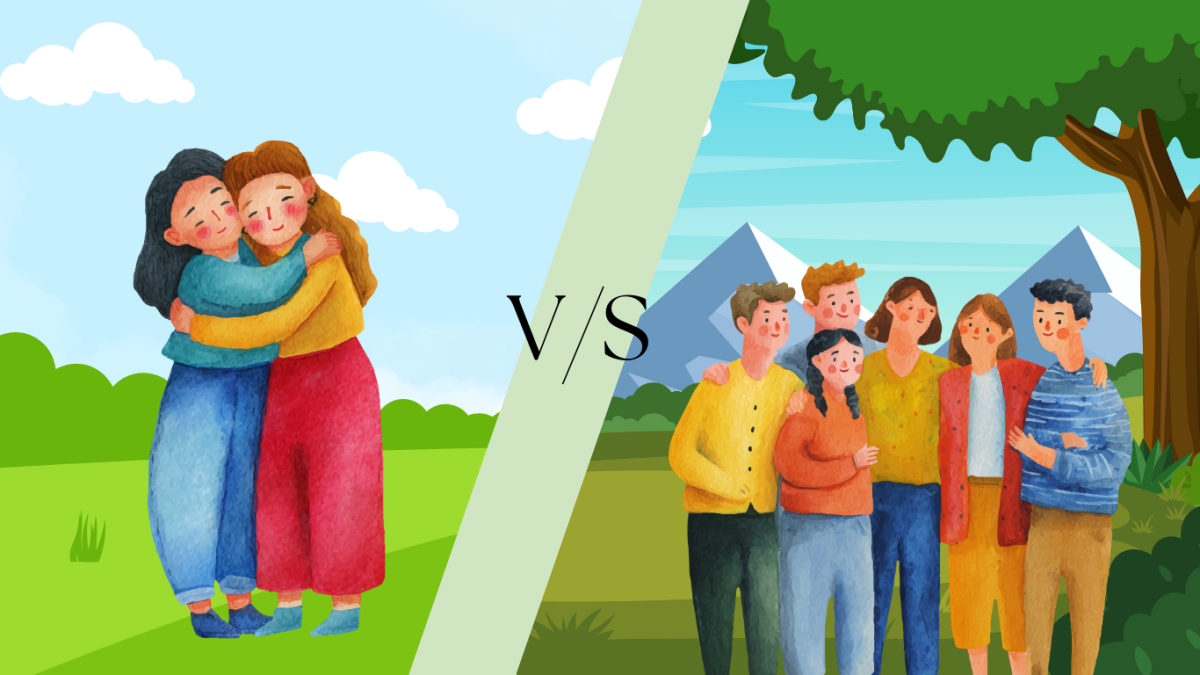
Overall, a smaller friend group typically consists of two to five people, including at least one close friend. A larger friend group is generally considered to be six or more people.
Contrast of Small vs. Large Social Groups
To better understand the difference, let’s explore the pros and cons, starting with a small friend group. One of the most obvious advantages is having deeper connections and stronger bonds. When your social circle is small, you’re more likely to have the time to get to know each person individually. This allows trust to grow through shared experiences and one-on-one time. These friendships are often the ones you rely on most, whether during good times or difficult moments.
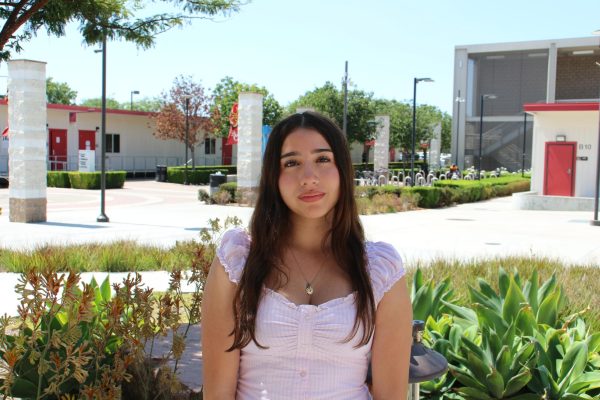
Sophomore Johan Castro shares how the quality of friendships can meet your own emotional needs.
“I believe that there are some friendships that can meet emotional needs… because there have been multiple occasions where I have asked some of my best friends for help in something when I’m emotionally hurt or stressed and they help a lot, and I don’t think normal friendships would do the same,” Castro said.
In other words, Castro agrees that strong friendships can meet emotional needs that typically weaker bonds can’t. This shows the importance of having someone you’re close with because they can be a helping hand in stressful or distressing situations.
Sophomore Samantha Martinez agrees and states there’s no reason to stay friends without trust.
“Trust is a deep role in friendships as there is no point in being friends with someone you do not trust as it creates mistrust,” Martinez said.
Trust appears to be a key trait in friendship for both Castro and Martinez, despite their different social groups. This suggests that whether you surround yourself with a large or small group, reliability is important.
However, social interactions may feel more limited. With fewer people in your circle, you have fewer opportunities to meet new individuals, which can make expanding your network more challenging.
Castro shared how having more people in your circle has its benefits when expanding your network.
“I believe having many friends does open many opportunities socially because friends can introduce you to new people who can also possibly become your friends or maybe even best friends. I would not say the same thing about professionally though because I feel like having a quantity of friends does not get you anywhere professionally. If you want to get something professional out of friends then you have to have certain friends like people who know or own companies and work in jobs that you might want to work in, where they could possibly recommend you,” Castro said.
Castro suggests that while a large circle can expand social opportunities, professional connections often require intentional effort.
Another benefit of a small friend group is the freedom to be yourself. In larger groups, people often feel pressure to fit in, even if it means going against their values. In a smaller circle, comfort and familiarity make it easier to express yourself without fear of judgment.
On the downside, very little goes unnoticed. Some days, you may feel overwhelmed or nonverbal, but in a small group, friends are more likely to question why. In a larger group, it’s often easier to step back and lay low without drawing attention.
A small social circle can also mean less drama. Many people can relate to the discomfort of seeing a large group split into pairs, leaving others unsure of where they stand. In smaller groups, communication tends to be clearer, and individuals often feel more secure in their place. Larger groups, on the other hand, may lead to conflict, sides being chosen, and sometimes even the breakdown of friendships.
That being said, group dynamics in a small circle are more fragile. If one person is absent or moves away, the atmosphere of the group can shift noticeably, sometimes leading to awkwardness. Additionally, smaller groups may offer fewer perspectives and opinions, which can be limiting when seeking advice or new ideas.
Despite this, small friend groups require less maintenance. There’s no pressure to constantly keep up with numerous people or manage overwhelming group chats. Planning social activities is also much easier with fewer individuals involved. Coordinating schedules, choosing locations, and even splitting restaurant bills becomes far less stressful.
Which One Is More Fitting for You?
Overall, it’s clear that a smaller social circle can be highly beneficial, though larger friend groups have their own advantages as well. Smaller groups often imply higher-quality friendships built on trust and emotional support. Meanwhile, larger groups provide more connections and opportunities to socialize. Having many friends can introduce you to new experiences, activities, and perspectives you may not have encountered otherwise.
Castro also shares his input in what has always worked for him.
“I’ve always tried to be friends with people who are funny and also care about you because that’s all that matters. One thing I could say though is that I have learned to comprehend between people who want to be friends versus people who are just faking being your friend,” Castro said.
“The friendships that have most impacted my life have been the friends that I have known since I was very young; 6 or 7, I say that these friendships have had the biggest impact on my life because they’ve been with me most of my life and they’ve helped me on multiple occasions in my life,” Castro said.
With this in mind, some people already have known what they want since adolescence. Castro has always been social, so naturally he made a vast amount of friendships throughout his life. Additionally, being social gave him the opportunity to even get along with people he doesn’t agree with. He also mentioned that even though he made many friendships, his oldest ones are his favorites.
Martinez shared her input on what a quality friendship means to her.
“To me a quality friendship is reciprocated actions between one another showing each other care and consideration,” Martinez said.
Whether you have a low social battery or a high one like Castro, a small friend group may still be suitable. Martinez is a prime example. She considers having a small social circle, yet strives because she has a deep bond with them. Prioritizing one or two meaningful friendships and being present for the people you care about plays a major role in building mutual trust. Knowing you can rely on someone without worrying about bad intentions can be reassuring.
However, friendships can also evolve over time as you get older. Martinez shared her experience as she grew older.
“My idea of friendship has changed throughout the years as I learned that the word friend is sometimes not true as you may care for a person more than they do for you,” Martinez said.
Even if you feel uncertain now or unsure which option fits you best, you still have years to discover where you feel most comfortable. You still have years to discover where you feel most comfortable. Maybe, you have a large circle now, but as you get older, the number narrows down to the friends that have always been there for you.
On the other hand, the opposite can also happen.You may have a small group of friends now, but as the years go on, you might find yourself making more friends as your communication matures.
From a scientific perspective, studies suggest that the quality of friendships has a positive impact on mental health and overall well-being. This highlights the importance of maintaining the relationships that matter most, rather than focusing on the number of friends you have. However, other research has found that older adults with strong social support systems tend to live longer than those with fewer connections. Ultimately, “healthy social support” can mean different things — whether it’s one deep bond or a larger, supportive circle.
Summary
Ultimately, deciding between quality and quantity in friendships depends on the individual. If you’re someone who enjoys trying new things and staying socially active, having a wide network of friends may suit you best. Different friends can offer different perspectives, advice, and experiences. However, you may prefer having a few people you can rely on and build deeper bonds with.
In conclusion, whether you choose to maintain a close-knit group or a broad network of connections, what matters most is how those friendships contribute to your happiness, sense of belonging and personal growth.