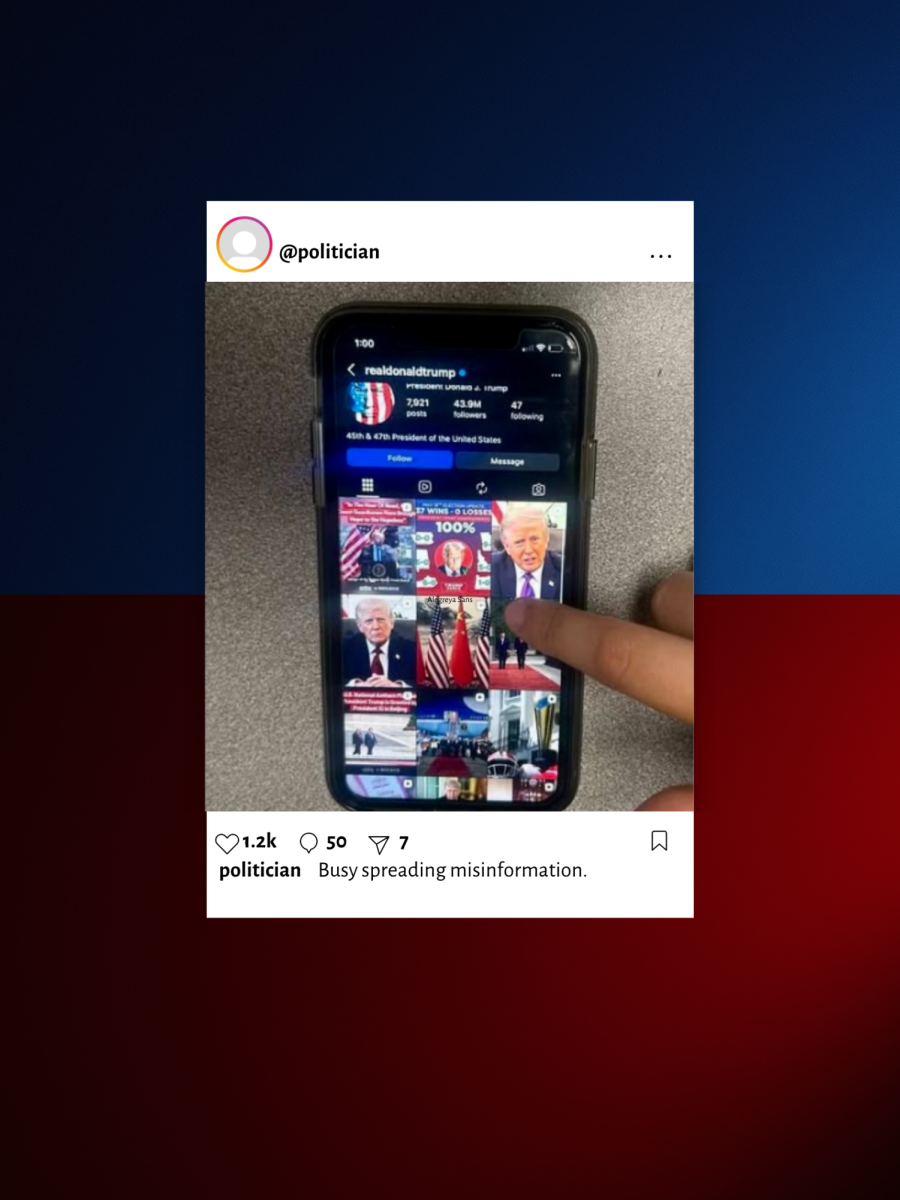





Scroll, scroll, like, scroll, scroll, pause. You stumble across an insensitive post, putting a halt to your scrolling as you read a sentence that screams of misinformation and fear-mongering. Then you look at the user who posted it, only to realize it was the very president of our country.
In the day and age of technology, nearly everyone has access to social media. Think about your younger sibling who’s barely in elementary school, your aunt who posts religiously on Facebook, your friends who tag you in weekly photo dumps, your peers who scroll on TikTok in class, you and even our political leaders. The list is endless, but one thing these individuals all share in common is that they can essentially post and consume whatever content they want. This does not mean social media comes without restraints, as users are encouraged to uphold a certain level of civic duty, but it certainly reinforces the idea that social media is a chaotic space where all worlds collide. What used to be a tool to connect with others online and build community has now become a digital weapon to fuel debates in comment sections, and it does not help that the same figures who are supposed to represent our country are actively contributing to the issue.
Political polarization & confirmation bias
Social media has notoriously become a source of political polarization through the use of profit-driven algorithms. Our For You Page knows us better than we know ourselves, and the majority of political content we watch reflects our own party alignment, dividing users instead of bringing them together. Nearly 65% of Americans who participated in a 2022 Pew Research Center poll said they felt divided in their political opinions online, suggesting that these apps only show us information that confirms our pre-existing beliefs.
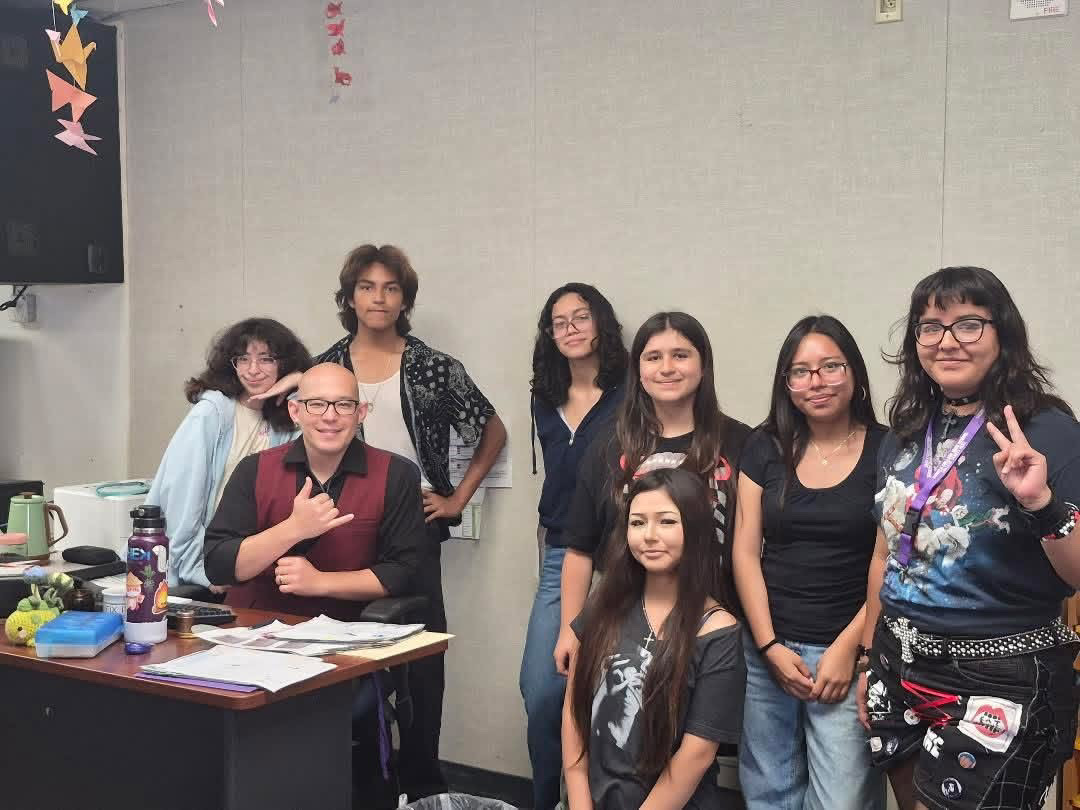
Philippe Andrade, a political science professor from Santa Ana College, expands on this issue by acknowledging the role the algorithm plays in reinforcing confirmation bias.
“We aren’t really getting information that’s outside of our bubble, that might contrast with our bubble, that might challenge whatever we think. We’re more or less just always being told how right we are. And so, if we’re right, then anyone who disagrees is not only wrong, but they’re a bad person. It’s cancerous, and we’re seeing it now in our democracy,” Andrade said.
If you’re right-leaning, you’re much more likely to encounter supportive commentary and highlights of Donald Trump’s presidency. Likewise, if you’re left-leaning, your algorithm will filter out such content to show posts that oppose his leadership. Lack of exposure to the opposing party’s views not only perpetuates the political divide among online users but also encourages an “us vs. them” mindset that leads to the development of extremism and sensationalism.
“There are nuanced voices out there but they’re not being promoted. Those put people to sleep. The world is always on fire,” Andrade said.
There is no moderation on social media anymore. There is a “good side” and a “bad side,” and whichever side you end up on dictates how you interact with others. Andrade explains how users are simply not willing to come to a compromise on their different beliefs.
“So then, it’s zero-sum. It’s either I win, and you lose, or you win, and I lose, as opposed to us trying to split the difference. Trying to find some middle ground,” Andrade said.
What happens, as a result, is that we side with the leaders on whichever app we’re using and block out all other information outlets, repeating a cycle of distrust, outrage and severe confirmation bias.
What do politicians have to say about it?
The faces of America do not always run their own accounts. High-profile figures like the president, White House officials, and local leaders rely on public relations (PR) and a team of social media managers to create content for them and maintain a curated image. However, when they do post, many take advantage of the app X, formerly Twitter. By design, the app prioritizes speed over substance, fostering an environment where leaders can make quick but unpolished announcements regarding the current political climate.
President Donald Trump, most notably, has been banned from the app before. On January 8, 2021, he was permanently suspended from accessing his account @realDonaldTrump due to the risk of further inciting violence following the Capitol raid.
It was deemed that the same individual responsible for leading our country was not responsible enough to have a platform, raising the question of whether politicians are truly uplifting online communities or tampering with them.
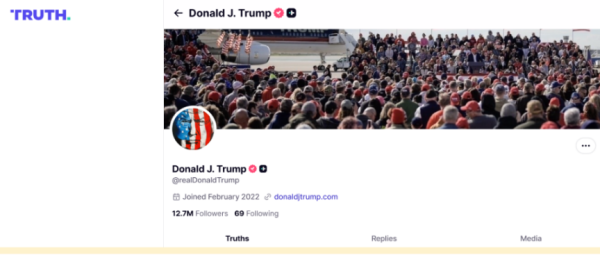
When Twitter was rebranded as X, Elon Musk reinstated the president’s account, but he moved to Truth Social, a company founded by Trump to promote free speech, where he posts to this day. Many of his recent posts continue to spark controversy and intensify the political divide.
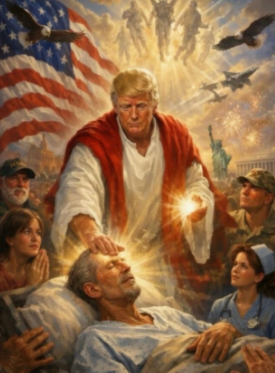
On April 12, he posted an AI-generated image depicting himself as Jesus Christ, which he took down a day later. The initial post not only received backlash from many members of the Republican Party, including his supporters, but also opened the general public’s eyes to the recurring nature of how politicians abuse their power online.
Trump has been able to use his political rhetoric to maintain a loyal fan base of supporters who appreciate his “authenticity,” or his ability to post controversial takes online without fearing the consequences.
“There’s clearly an appetite for that. I think now more than ever, that’s what Trump has tapped into. It’s kind of been the recipe for his political success. Social media gives politicians the ability to fuel extreme views, even though, ultimately, they’re editing their stuff. It’s not really raw and unfiltered, but it’s at least their intent to come off as that,” said Andrade.
Andrade further touches on how multiple politicians, aside from Trump, strategically use social media to build an advantageous image.
“That was one of the big sells for her [Kamala Harris], how masterful she was with social media. She was a walking meme. You take a look at Kamala Harris, who has not been criticized. Some politicians will say their social media strategy is lacking or that their social media presence wasn’t enough. That wasn’t with Kamala Harris. She had A++ scores on all that,” Andrade said.
Trump and Harris alike are politicians using their voices on social media to appeal to a particular demographic of voters. Whether their approach is effective or not varies from individual to individual, yet it continues to leave a digital mark and plant ideas in the minds of their supporters.
For former President Joe Biden, social media was not the primary tool he used to engage with the public; however, he still benefited from his lack of online presence in the sense of gaining votes during the election period through more traditional means.
“Her social media didn’t really translate to the votes for her. In contrast, you take someone like Joe Biden, who was not someone seen as all that social media savvy and relatable, but it translated to votes in his case. So, you know, there is the question, how effective is it [social media] really in terms of resulting in votes?” Andrade said.
A strong online presence does not guarantee electoral success or even public support and likability. Promoting political campaigns on social media is not inherently problematic, but when candidates begin to attack each other online and “smear” each other’s campaigns, their intentions must be questioned. Eventually, the race for going viral competes with establishing credibility and building rapport, highlighting how our leaders’ presence on these apps may be solely for personal gain, brand preservation and spreading propaganda to an already extremist audience.
Preserving democracy
One of the core principles our country prides itself on is our right to free speech. The social media platforms that operate within our state profit from our rights by intentionally designing an algorithm that promotes friction. Although there are multiple exceptions to this right, such as incitement, true threats, defamation and obscenity, provocative posts from our leaders have sparked political discourse over where the line between protected speech and manipulation should be drawn.
Because the social media companies are privately owned, the government cannot dictate how each upholds free speech laws within their app. These tech corporations operate under their own terms and conditions, often tolerating insensitive content that pushes the apps’ boundaries because it drives engagement.
“What people need to remember is, bottom line, these social media platforms, though we use them as the public square, they’re privately owned companies. If you use the example of X or Twitter, Musk owns it, and to a large degree, he can do what he wants with it, right?” Andrade said.
As seen in 2021 when Trump was banned from Twitter, there are limits to what politicians can say online, though the enforcement of app guidelines is not always consistent. Regaining access to his account showed the extent to which apps will go to sacrifice online peace by throwing a notorious user into the debate if it means drawing attention to their company. Such opportunities are precisely why many leaders’ online behavior remains unchecked, implying that views are more meaningful than creating a respectful community.
As consumers of the media, we can choose whether we want to actively participate in the spread of extremist content or restore equilibrium in our online space. The issue of politicians misusing their platforms is multifaceted, but it’s deeply rooted in their own abilities to take responsibility for their actions, along with how the apps are structured.
With new alarming content emerging every day, it is crucial that we expand our social media consumption beyond content that caters to our own opinions. Remaining a critical thinker with media literacy is a valuable asset to have in this political landscape. As we work towards creating a more empathetic online space, we should not give our leaders too much power online. In fact, we must hold our leaders accountable for the social media discourse that occurs on their behalf; otherwise, we are only minimizing the effect they have on our democracy and portraying their behavior as acceptable.
As many from my generation prepare to graduate and cast their very first vote at the ballot box, we cannot afford to let misinformation and propaganda determine our future. We are the key to reshaping the ongoing internal conflict in our country, and we cannot allow extreme content to distract us from the immense influence we truly have.
“You couldn’t design anything more dangerous for our democracy than what we have with social media and the way we’re using it. It’s not sustainable. Our democracy is on a path to destruction unless we simply become better,” Andrade said.