




















Scroll. Newest Hollister drop! Scroll. TikTok Shop flash sale–everything 40% off plus free shipping! Scroll. Click. Click. Scroll. Add to cart. Proceed to checkout. Purchase is confirmed. Thank you for shopping with us.
Social media’s popularity has never been higher; various platforms have become a medium for self-expression, communication and advertisement. It seems as if every other social media post is a sponsored ad or an influencer paid promotion. The presence of social media advertising directly promotes impulsive buying behaviors, reckless spending and increases materialism.
Through microtrends and FOMO (fear of missing out)—hauls and unboxing videos—mass audiences are fed hours of content that glamorize the need to own anything and everything.
Marketing and Algorithms
Social media marketing began in the mid-2000’s and with the continuous growth of social media, businesses capitalized on it—on the chance to reach out to their online customers and endorse their product via their social media feeds. From 2010 to 2025, the population of users grew from 1 billion to 5.4 billion—meaning 60% of the global population is exposed to online advertising. Especially considering that now, over 90% of marketing executives use social media as part of their marketing strategy.
Social media platforms are here to stay, and apparently, so is the concept of online advertising, now that it has become a regular part of marketing tactics. The question is how exactly has these new methods affected the wallets of social media patrons?
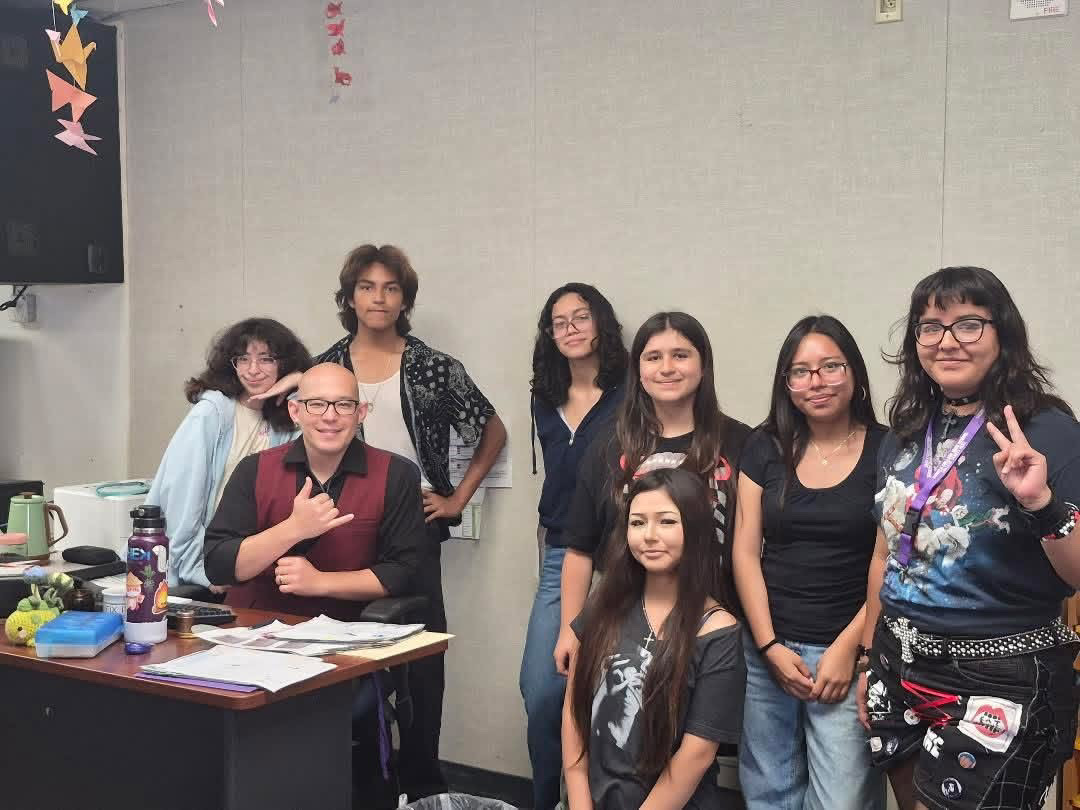
Godinez sophomore Victoria Facio and Middle College sophomore Aaliah Saucedo admit to falling for the influence of ads—they also weighed in on the strong influence social media holds.
“Social media and social media ads have influenced me to buy products, even if I don’t necessarily need them,” Facio said. “I think social media promotes items in a very meticulous way that makes people drawn to the aesthetics of the product, leading to purchases with little thought.”
“Sometimes I’m not even thinking about buying anything, and then I see a video and suddenly I want it. Before I saw it, I didn’t even care about it,” Saucedo said. “Social media can make small things feel more important than they really are.”
The concept of mindless spending trends among consumers. When bombarded with skillfully integrated ads, flashy posts and influencers flaunting their latest purchases, viewers blur the line between practicality and desire—replacing responsibility with instant gratification.
The question in buyers’ heads is no longer, ‘Do I need it?’ but instead, ‘How quickly can I get it?’
Santa Ana resident, Jazmin Gonzalez, 25, shares her experience with media-influenced buying.
“Usually I buy whatever I see on social media, I’m sort of easily influenced. Sometimes I buy things I don’t even need or didn’t know I wanted until I saw it on TikTok,” Gonzalez said.
As someone who has fallen prey to media marketing, Tustin High School sophomore Ashley Aguilar voices her opinion on modern needless spending, along with her personal experiences.
“I think a lot of the things we buy nowadays are more wants than needs, which leads to overconsumption,” Aguilar said. “I myself have been influenced through social media and its propaganda into buying something I didn’t necessarily need.”
To further illustrate the feeling of reckless buying, Saucedo and Gonzalez describe the events that follow after their shopping carts are emptied.
“Sometimes after I buy something, I realize I didn’t really need it. The excitement goes away quickly. Then I see that I mostly bought it because I saw it online,” Saucedo said.
“Like I said, I buy almost everything I see on social media and sometimes I don’t even realize how unnecessary it is until I’ve actually bought it,” Gonzalez said. “When I buy clothes, sometimes I think, ‘Oh, that looked cuter on the website,’ or sometimes I get makeup that influencers review, but when I buy it, I’m not the biggest fan.”
So maybe you don’t need the latest iPhone or that one top, but those back-to-back ads are making it hard to resist the purchase. All the sponsored videos and product reviews, mixed with countless ads and posts with raving reviews in the comments—it all seems endless. Maybe you would take this as a sign; it’s the universe’s way of saying you must have this product—but really it’s just the app adapting to your interests.
Social media algorithms cater to their user’s interests; their design enhances satisfaction and engagement. Essentially, if your algorithm picks up on specific content you favor—or show particular interest in—similar materials will be pushed onto your feed. Seeing as how algorithms personalize content, the exposure to repetitive or similar products and advertisements can trigger an impulsive reaction—ergo, an unnecessary purchase.
Dissecting the mechanics of online promotion only tackles one reason many studies link social media to compulsive buying. The other reason lies through the screen. Within the pixel walls that are social media, there are trends, influencers and peer pressure telling you from all sides that you must have the latest…everything.
“I’ve seen things on TikTok and then wanted them right away. What influenced me was how many people were saying it was good. When everyone is talking about something, it makes you want to try it too. But at the end of the day, it was still my choice to buy it,” Saucedo said.
Trends and FOMO
In the desperate scramble to follow what social media collectively deems “in,” people rush to buy product after product, simply because it’s popular—at least for the next two weeks before the internet finds something new to fawn over.
“I do follow a lot of trends, mostly the clothing ones, but there have been times when I’ve bought something just because it was trending,” Gonzalez said.
Gonzalez provides further insight on trend-hopping leading to mass overconsumption.
“I remember when Stanleys were a big thing, I bought one, but I was kind of surprised that people were buying multiple in different colors. At one point I was just thinking, ‘What are you going to do with five of the same water bottle?’ It’s not even just that, whenever something becomes popular, everyone runs to buy it in bulk,” Gonzalez said.
Trends come and go, but the buying never stops. As new fads arise, people dive in headfirst into the craze. Simply buying one trendy product can be a slippery slope to mass consumption. But why? What allure drives these urges—is it practicality, desire or ostentatiousness?
“I feel like it’s all for the purpose of fitting in. If you really think about it, what most young people want is to fit in; a lot of people are scared of sticking out for the wrong reasons,” Gonzalez. “Anyone would hate to be the one who stands out because they’re not dressing in the latest fashion trend or buying the newest gadgets.”
Wanting to “fit in” and having a “fear of missing out” are concepts cut from the same cloth. Whether you buy something to fit in with the crowd, or if the crowd made it sound so great you got upset you didn’t own it, all roads point back to purchases influenced by pure desire.
Saucedo and Gonzalez share their experience with FOMO.
“When something is trending or almost sold out, it makes you feel like you need to get it fast,” Saucedo said. “You don’t want to miss out or feel left out.”
“Oh, I’ve definitely experienced FOMO, like all the time. It’s kind of just a mob mentality. You see everyone online having these new things, and you kind of feel bad about yourself because you’re the one missing out,” Gonzalez said.
At the end of the day, it’s not just about a water bottle, a top or the newest drop—it’s about how easily a scroll turns into a purchase. Social media has mastered the art of making wants feel like needs and trends feel like necessities. Maybe next time, before clicking “add to cart,” the question shouldn’t be how fast it will ship, but whether it was ever needed in the first place.