











A beautiful bouquet of tulips can say ‘I am sorry for your loss,’ ‘I love you,’ ‘Feel better,’ or ‘Goodbye,’ without a single word being said. From birthdays to funerals, flowers show up in the major moments of our lives. Have you ever wondered though, how something so effortless can hold so much meaning?
Biologically, flowers are just a part of a flowering plant. Emotionally, they are so much more for a person. For thousands of years, cultures and generations have given them deep sentimental value. This connection stems from our natural attraction to color and beauty.
Flowers have long been used to express feelings that we are unable to or struggling to say out loud. In the 19th century, during the Victorian era, public display of affection towards another was highly demoralized because of certain social expectations. Pushing writers to create a new form of ‘tongue,’ specifically for flowers. Known as floriography.
Floriography–the language itself is determined through certain characteristics in flowers, such as color, shape, or species.

Over time, these meanings and symbols became widely recognized, allowing people to communicate emotions without speaking. According to Rutgers University ‘About Flowers’ Research, “Researchers conducted a 10-month study on how flowers affect mood and found they naturally improve emotional well-being. Participants immediately felt happy, showing genuine smiles when receiving flowers, no matter their age. Over time, they reported feeling less stressed, anxious, and depressed, while also experiencing greater life satisfaction. Flowers also encouraged stronger connections with family and friends. The presence of flowers triggers happy emotions, heightens feelings of life satisfaction and affects social behavior in a positive manner far beyond what is normally believed.”
The research conducted by Rutgers University, proves that flowers shape the emotions people feel after receiving them. Together, it explains why flowers are still used to show love, support, and sympathy today.
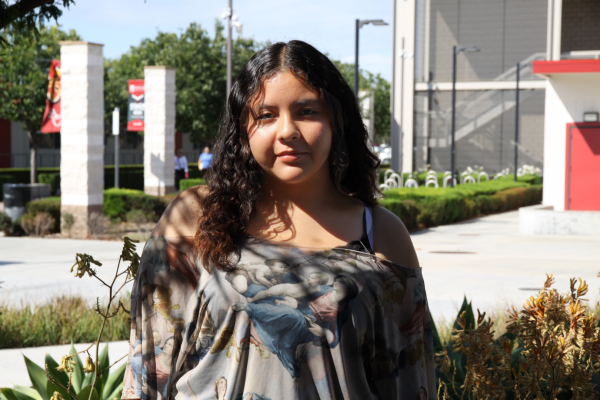
Senior Dianna Razo, who loves both giving and receiving flowers, agrees that they hold more of a deep sentimental value instead of physcial.
“Flowers often hold a lot of meaning and symbolism when they are given at certain events. They can represent love, affection, apologies, comfort, sympathy, or grief,” Razo said. “They are also used to show respect for a person, especially because they are given during important moments in people’s lives.”
Razo’s perspective shows that flowers are more than simple gifts, instead they serve as an act of kindness, or a way of expressing ourselves to others without physically speaking. Highlighting the important role that flowers play in human connection and emotional expression.
NAC Mentor, Gabby Antunez is also a flower lover and she reflects on her own emotional bond with flowers.
“I love reciving flowers and I tend to receive the most flowers on my birthday. My favorite are white flowers but specifically, white daisies.” Antunez said. “I also give flowers a lot too because I think that they are special and special people deserve to get them.”
Antunez adds on to her reasoning for giving flowers and why she thinks humans are emotionally attached to them.
“My family receives the most flowers from me because I feel that I have to show gratitude and to let them know I care. I find it easy to do this through flowers because of the different meanings each one holds.” Antunez said. “I believe that humans are emotionally attached to flowers because they usually represent something positive, honest, or for love and receiving them feels like appreciation, it makes someone feel special.”