



























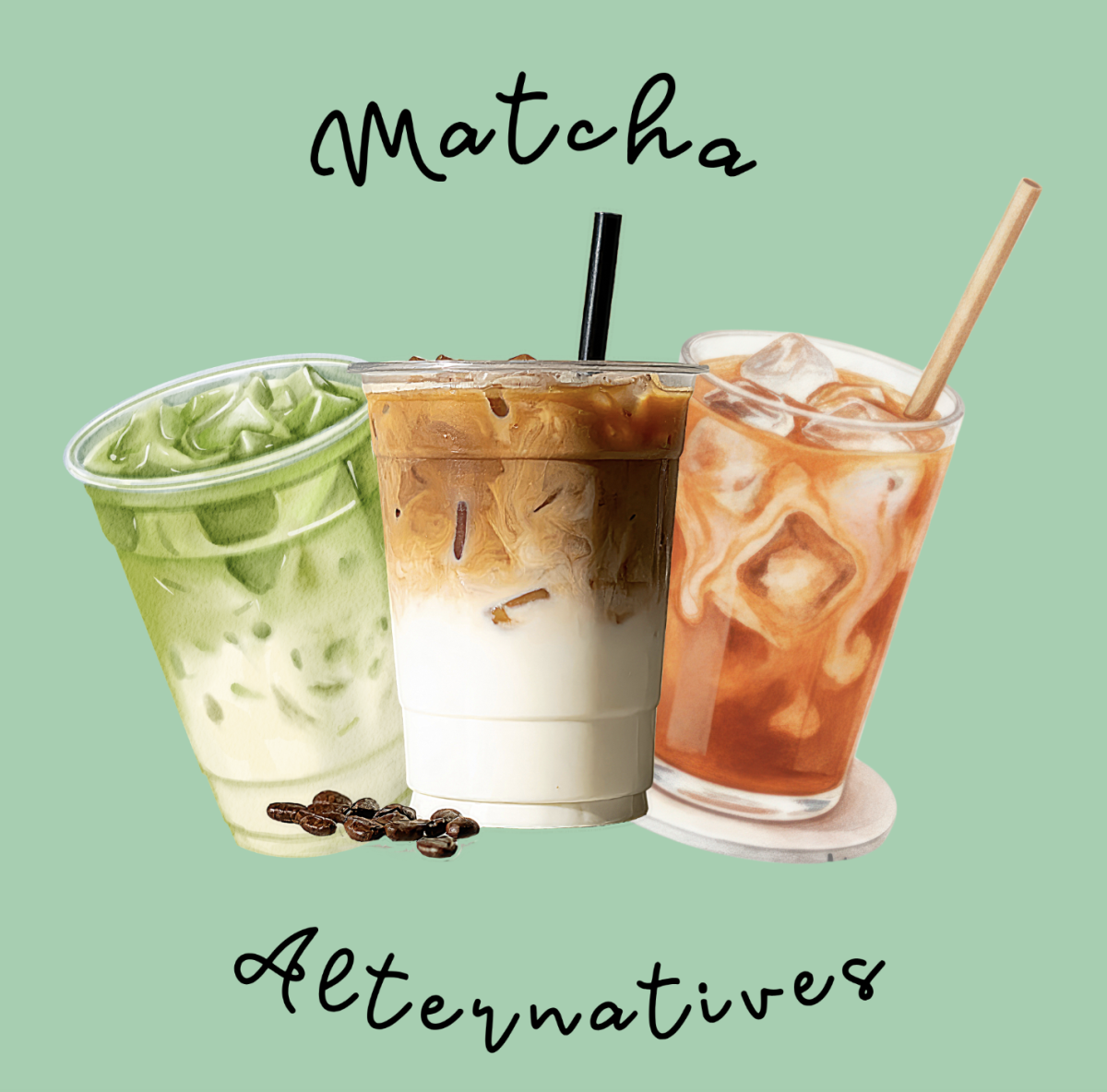
Matcha lattes, matcha cookies, matcha ice cream, matcha, matcha, matcha. This Japanese green tea powder has taken over the world. People have started consuming matcha daily through desserts and drinks. It first rose in popularity in 2015, coffee shops started including this drink into their menus. However, this fame skyrocketed more towards 2024, with matcha trending all over Instagram and TikTok. People started associating matcha lattes with the “performative” aesthetic.
As aesthetic and delicious as matcha is, having too much of it can block iron absorption, digestion issues, anxiety, insomnia and liver problems. People may start to experience jitters or insomnia if they drink too much matcha. Many brands might sell low-quality green tea powder that can lead to the consumption of heavy metals or pesticides. To combat this, there are many different types of drinks that you can try. These matcha alternative drinks can taste sweet, floral, earthy, or nutty.
One alternative to matcha is Thai tea. This drink is composed of a strong black tea base. It is brewed strong to counter the sweetness of the sugar they add in while making the tea. The taste balances floral sweetness with earthy spice, making it creamy and sweet. This drink does not have too much caffeine, with 60 to 80 milligrams of caffeine per cup. It boosts concentration and contains important antioxidants that would help prevent damage to your cells. This means having thai tea–as long as it isn’t loaded with sugar–can help prevent harmful diseases such as cancer, cardiovascular disease, Alzheimer’s disease and macular degeneration.
Hojicha and matcha are very similar as they are both Japanese green tea. However, hojicha is roasted, giving it a different flavor, color, and caffeine profile. It is naturally low in terms of caffeine content with around 15 milligrams of caffeine per cup. Since it is roasted, it is an earthy shade of reddish-green. This drink is described as having a chocolaty, nutty flavor with roasted notes reminiscent of coffee, caramel, or toasted nuts. Drinking hojicha leads to feeling refreshed and motivated, which can help increase concentration and enhance cognitive function.
Pandan is a tropical Southeast Asian leaf, which is extracted and turned into a syrup or floral tea. Pandan lattes are made with pure pandan tea or juice, giving it a blend of sweet vanilla and coconut with nutty undertones. The earthy sweetness of pandan rounds out coffee’s bitterness, creating a florally sweet taste. Although many cafes call it a pandan latte or pandan coffee, it is naturally caffeine-free. Pandan is rich in antioxidants, has calming properties, supports digestion, and promotes relaxation and concentration as well.
Chai is a tea that is made by brewing black tea leaves and spices in milk and water. It is then sweetened with sugar or syrup. It can be described as spicy, but depending on how you make it, the tea can also be sweet and milky. It delivers a lighter, shorter boost of caffeine as the tea is not super strong, and the sweetness balances it out. A cup of chai is around 30 to 40 milligrams of caffeine. When drinking chai, it provides anti-inflammatory properties for the body as well as potential benefits for heart health. It has an amino acid called L-theanine, which enhances focus and stable energy levels. It can also reduce bloating, improve digestion and cognitive function, and lower blood pressure as long as it is not loaded with sugar.
These drinks are all unique in taste in their own way, with some of them having a similar taste profile to matcha, while others are slightly different. Most of these alternatives also contain caffeine, which can be beneficial if you want to gain some energy or need something to help you concentrate.
And, who knows, maybe one of these drinks will end up being your favorite!