

















It starts with a vibration.
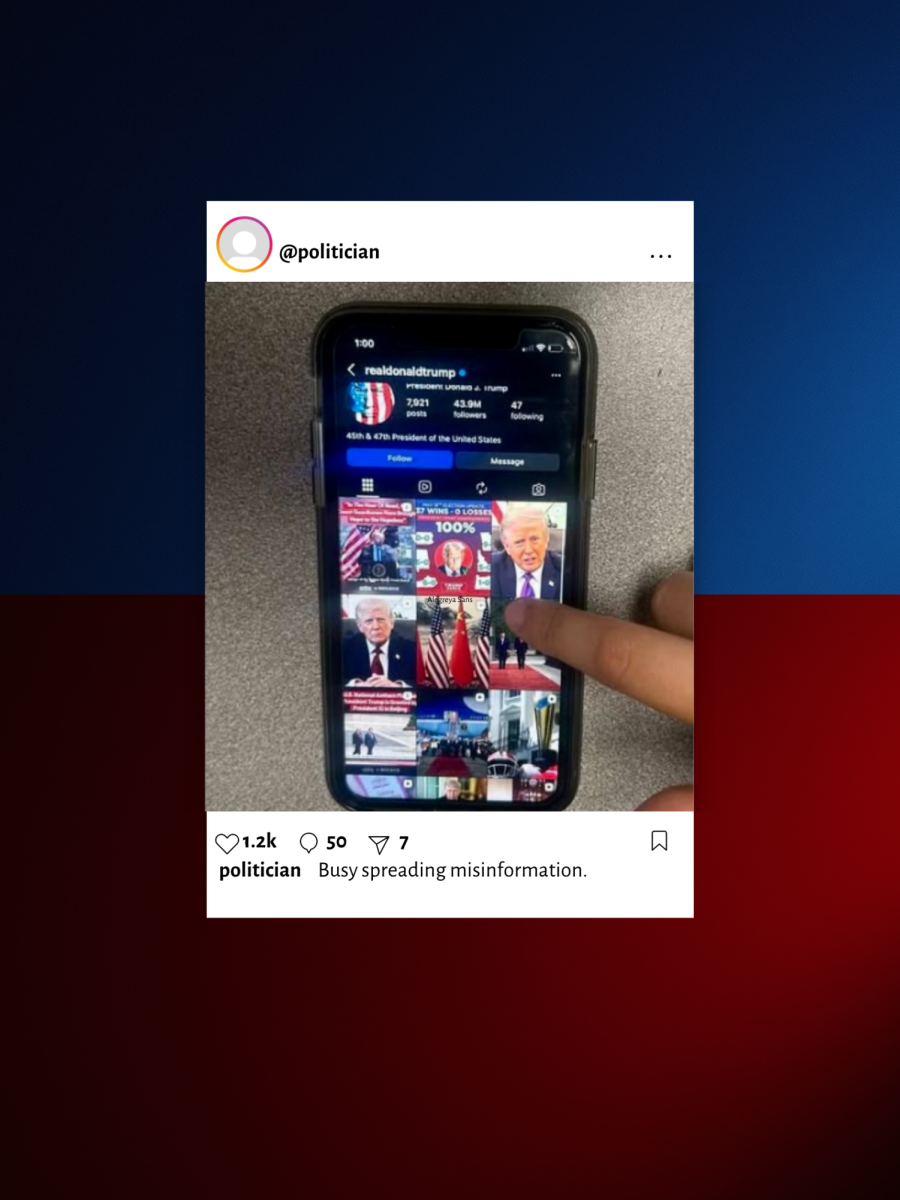
A phone lights up: another breaking headline, another emergency alert, another video already spreading faster than the one before it. Somewhere in the scroll, a war unfolds in 15-second clips. A few posts later, a school shooting. Then inflation. Then another political controversy. Then a celebrity scandal. Then a recipe video. Then another disaster.
No one has time to process any one incident.
Before one event can fully settle into people’s minds, another arrives, demanding attention. The cycle repeats itself endlessly, creating the feeling that the world is constantly collapsing in real time. For many young people growing up online, a crisis no longer feels like an isolated moment. It feels permanent.
Modern audiences are now consuming information in ways previous generations never experienced. Younger audiences increasingly encounter news passively through platforms such as TikTok, Instagram, YouTube and X, where information appears continuously through algorithm-driven feeds rather than through intentional searching. Instead of receiving structured reporting with clear beginnings, context and resolution, audiences are exposed to fragmented headlines, clips, reactions and commentary stacked rapidly on top of one another.
Constant exposure to crisis-heavy content has also been linked to heightened stress responses, emotional fatigue and long-term anxiety, particularly when audiences consume distressing information repeatedly throughout the day. Unlike traditional media environments, digital platforms rarely provide natural stopping points. News no longer exists as something people consume during designated parts of the day as in the past. Instead, it follows them everywhere, from classrooms to bedrooms to the first moments after waking up in the morning to just before closing your eyes at night.
As a result, modern media environments do not simply report crises. They compress them together, amplify urgency and deliver them in a nonstop stream that can make the world feel far more unstable than it actually is.
Dr. Kaylee Estes, a University of California, Irvine researcher who studies psychology and media exposure, said the overwhelming feeling many people experience today is not necessarily because the world is objectively more dangerous, but because audiences are now exposed to an unprecedented amount of information all at once.
“I think it mostly feels that way,” Estes said. “A lot of research suggests that crime is at an all-time low and things like that. But for the first time ever, we’re experiencing everything around the world, not just our local or national news.”
For decades, most people consumed information in limited windows of time, whether through newspapers in the morning or evening television broadcasts. Today, however, the boundaries between daily life and global events have almost completely disappeared. A person can move from watching entertainment content to graphic footage of war within seconds, often without warning or emotional preparation. Since social media feeds prioritize immediacy and constant updates, users are repeatedly introduced to new crises before earlier events have even been fully resolved.
“What’s funny about humans is that we’re equally rational and not rational,” Estes said. “We’re processing so many events that we’ve never had to deal with this many events this quickly.”
The speed and intensity of digital media have fundamentally altered the way audiences emotionally interact with information. Rather than sitting with one event long enough to fully understand it, users often consume crises in fragments while simultaneously being pushed toward the next trending topic. This constant transition between emotionally intense content creates an environment where people remain psychologically alert for extended periods of time without realizing the effect it may be having on them.
Estes explained that social media algorithms intensify this process because emotionally reactive content naturally generates more engagement.
“There is some interesting research that was done on Twitter,” Estes said. “We know that certain emotions are more contagious than others. Anger is more contagious than sadness. Anything that fuels anger becomes more viral, and that gets shared more.”
Platforms built around engagement reward content that provokes immediate emotional reactions. Anger, outrage and fear tend to spread faster online because people are more likely to comment, repost or continue watching emotionally charged material. Over time, algorithms begin reinforcing those viewing patterns, continuously surfacing similar content back to users. Even brief interactions with distressing media can signal interest to the platforms, creating a cycle where crisis-driven content becomes increasingly difficult to escape.
“I think it’s subconscious,” Estes said. “Like rage bait, you just can’t help yourself. You see something horrible and feel like you have to comment on it, and all the engagement keeps it going.”
For many students, this cycle has become embedded into everyday life. Serious world events appear so frequently online that exposure to tragedy often feels routine, blending into ordinary scrolling habits alongside entertainment and personal content.
Sophomore Diana Granados said she encounters serious news online almost constantly because of the type of content she follows on social media.
“I usually see serious world events every day since I follow many news sources, political content creators and (I) seek out such news coverage,” Granados said.
While social media allows young audiences to stay informed about issues happening around the world, Granados believes the structure of these platforms has also changed the emotional weight many events carry. The ability to instantly move past distressing content with a single swipe creates emotional distance between users and the situations they are watching unfold on their screens.
“I think social media makes bad news feel underwhelming since people can simply scroll away instead of watching the full thing and seeing the reality of what happens,” Granados said. “In a sense, people are being desensitized.”
That desensitization does not necessarily remove emotional stress. Instead, it often creates a different kind of exhaustion, one built from repeated exposure to suffering, violence and instability over long periods of time. Since so much crisis-related content now appears alongside ordinary daily posts, users rarely experience a true emotional break from serious world events.
“I feel very emotionally drained after seeing a lot of news online since there’s many innocent people in the world suffering,” Granados said. “News especially stresses me out when it relates to things such as public education, tuition costs rising, civil rights and immigration since these affect my own circumstances.”
Researchers studying media exposure have found that repeated interaction with distressing news can contribute to what psychologists describe as a “cycle of distress,” where emotional anxiety encourages individuals to consume even more coverage, which then reinforces additional stress responses over time. Rather than helping audiences feel informed or reassured, nonstop exposure can gradually intensify fear and emotional fatigue.
Estes said part of the reason these effects occur so strongly is because humans are naturally wired to focus on threatening information.
“We’re naturally attracted to negative information because it might protect us,” Estes said. “That goes back to when we lived in tribes trying to outrun lions.”
Although the instinct once served as a survival mechanism, digital media environments now exploit the same psychological tendencies at an unprecedented scale. Instead of responding to one immediate threat, audiences are exposed to hundreds of alarming stories occurring across different parts of the world within a single day. As the brain interprets much of this information as urgent, people can begin feeling emotionally overwhelmed even when the events themselves pose no direct danger to their daily lives.
“Our brains are not made to keep up with all these events,” Estes said.
The nonstop nature of online news also means there are very few opportunities for emotional recovery. Unlike traditional media, where broadcasts eventually ended or newspapers were physically put away, social media platforms remain active at all hours of the day. News exists within the same spaces people use for entertainment, communication and relaxation, making it increasingly difficult to fully disconnect.
Senior Stephanie Camilo explained that constant accessibility of online information makes it feel as though there is never truly a pause between major events anymore.
“As a very rough estimate, (I spend) every five minutes on specific apps or at least it feels that way,” Camilo said. “On TikTok, for example, I could be watching a video about a baking idea, then a few scrolls later I’m learning about the possibility of a deadly virus breaking out.”
Camilo said social media often intensifies fear because many creators present information in exaggerated or emotionally dramatic ways in order to increase engagement.
“I think social media can make bad news feel more overwhelming because certain creators make news seem more intense for engagement purposes,” Camilo said. “They often use dramatic music and clickbait titles to capture attention.”
As audiences repeatedly consume emotionally heightened content, their perception of the world can gradually shift. Constant exposure to violence, conflict and fear-driven headlines can create the impression that danger is constant and unavoidable, even when many people are not directly experiencing those threats in their everyday environments.
“Over time, their perspectives of the world can be warped into a narrative of hate and fear,” Camilo said.
Estes explained how this distorted perception of danger is something she has directly observed while researching media exposure and violent events.
“I think it makes people think the world is more dangerous than it is,” Estes said. “If social media makes it seem like you’re in danger every time you leave your home or go to school, over time, you start to believe it.”
The emotional effects are not always immediate or obvious. In many cases, the exhaustion develops slowly through repeated exposure over months or years. As constant alerts, updates and notifications have become such a normalized part of modern life, many people fail to recognize how overwhelmed they actually feel until the stress begins affecting their emotional well-being.
At the same time, many users feel pressure to remain continuously informed. In online spaces, stepping away from the news can sometimes feel irresponsible, particularly among younger audiences who associate awareness with morality and social responsibility.
“I think there’s this need to be aware of everything going on,” Estes said. “People feel like bad people if they step away from the news.”
However, Estes emphasized that creating boundaries with media consumption is not harmful or selfish. In many cases, she said, it is necessary for maintaining emotional well-being in environments built around nonstop exposure.
“It’s perfectly okay to take a break,” Estes said. “You don’t need to know about every single thing going on in the world. It doesn’t make you a bad person.”
Even Estes admitted she has had to intentionally reshape her own online habits in order to create healthier boundaries with digital media. Following the 2024 election cycle, she began filtering political language from parts of her social media feed to reduce constant exposure to distressing content.
“I filtered out words like news, politics, Trump, Harris, Democrat, Republican,” Estes said. “I had to train my algorithm a little bit.”
For many students, though, escaping the constant flood of information remains easier said than done. Phones remain only inches away throughout nearly every moment of the day, carrying endless notifications, updates and headlines directly into people’s personal spaces. As a result, the modern media experience rarely allows audiences the opportunity to fully emotionally recover before the next crisis arrives demanding attention once again.
And maybe that is what defines modern life online: not simply that crises happen, but that they never seem to end.